Hearing loss is a common health issue that affects millions of people around the world. Unfortunately, many individuals do not recognize the early symptoms until the condition becomes more severe. Identifying the early signs of hearing loss can help you seek treatment sooner and protect your hearing health.
Hearing problems can occur due to aging, loud noise exposure, infections, or medical conditions. The earlier you notice the warning signs, the easier it becomes to manage hearing loss and improve communication.
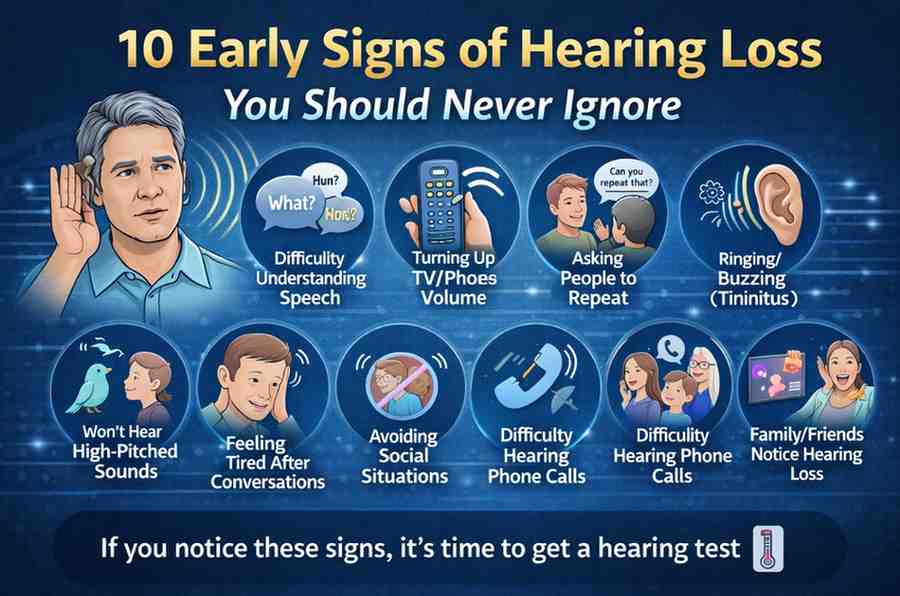
In this article, we will discuss 10 early signs of hearing loss you should never ignore and when you should consider getting a professional hearing test.
1. Difficulty Understanding Conversations
One of the most common early signs of hearing loss is difficulty understanding conversations. You may notice that people seem to mumble or speak unclearly even though they are speaking normally.
This often happens because hearing loss affects the ability to detect certain sound frequencies, especially speech sounds.
If you frequently struggle to follow conversations, it may be time to get your hearing checked.
2. Frequently Asking People to Repeat Themselves
Do you often ask people to repeat what they just said? If this happens regularly, it could be a sign of hearing difficulty.
Many people with early hearing loss rely on others repeating sentences multiple times to understand them properly.
While occasional repetition is normal, frequent repetition requests may indicate a developing hearing issue.
3. Turning Up the Volume on TV or Phone
Another early sign of hearing loss is increasing the volume on televisions, smartphones, or music devices.
If others complain that the volume is too loud but it sounds normal to you, your hearing ability may be declining.
Over time, individuals with hearing loss tend to rely on higher volume levels to understand sounds clearly.
4. Trouble Hearing in Noisy Environments
People with early hearing loss often struggle to hear conversations in crowded places such as restaurants, markets, or social gatherings.
Background noise makes it more difficult for the brain to separate speech from other sounds. This is known as speech-in-noise difficulty, which is a common symptom of hearing loss.
If you find it hard to focus on a conversation in noisy environments, it may be a warning sign.
5. Ringing or Buzzing in the Ears (Tinnitus)
Experiencing ringing, buzzing, or humming sounds in your ears is known as tinnitus.
Tinnitus can occur alongside hearing loss and may appear before noticeable hearing problems develop.
If you experience constant ringing in your ears, it is important to consult a hearing specialist.
Modern hearing aids often include tinnitus management features that help reduce these symptoms. Learn more about hearing aids for tinnitus and how they can help manage ringing in the ears.
6. Difficulty Hearing High-Pitched Sounds
High-frequency sounds are often the first to be affected by hearing loss. These sounds include:
-
Children’s voices
-
Birds chirping
-
Doorbells or alarms
-
Certain speech sounds like “s” and “th”
If these sounds become harder to hear or seem less clear, it could indicate early hearing damage.
7. Feeling Tired After Conversations
Listening fatigue is another sign of hearing difficulty. When your brain works harder to understand speech, it can make you feel mentally exhausted after conversations.
You may notice that long discussions or meetings leave you feeling unusually tired because your brain is constantly trying to fill in missing sounds.
8. Avoiding Social Situations
Hearing loss can sometimes lead to social withdrawal. When conversations become difficult to follow, people may begin avoiding social gatherings or group discussions.
This can affect confidence, relationships, and overall mental health.
Recognizing this early sign can help you take steps to improve your hearing and maintain an active social life.
9. Difficulty Hearing on Phone Calls
Phone conversations rely completely on sound without visual cues like facial expressions or lip movements.
If you often struggle to understand speech during phone calls, it may be an early symptom of hearing loss.
Modern hearing aids with Bluetooth connectivity can help improve phone communication by streaming sound directly into hearing devices.
10. Family Members Notice Your Hearing Problems
Sometimes, friends or family members notice hearing issues before you do. They may mention that you:
-
Respond incorrectly during conversations
-
Ask for repetition frequently
-
Keep the TV volume too high
If loved ones raise concerns about your hearing, it is important to take it seriously and consider a professional hearing evaluation.
When Should You Get a Hearing Test?
If you experience any of these signs, scheduling a hearing test is the best way to determine whether you have hearing loss.
A hearing specialist can assess your hearing ability and recommend suitable solutions. In many cases, early hearing loss can be managed effectively with modern hearing aids.
If you are looking for hearing solutions for older adults, you can also explore hearing aids for senior citizens to learn about devices designed specifically for age-related hearing loss.
How Hearing Aids Can Help
Modern hearing aids are advanced digital devices designed to improve hearing clarity and overall communication. They offer features such as:
-
Noise reduction technology
-
Bluetooth connectivity
-
Rechargeable batteries
-
AI-based sound adjustment
-
Tinnitus relief features
These innovations make hearing aids more comfortable, effective, and convenient for daily use.
Early diagnosis and treatment can significantly improve quality of life and help people stay socially active.
Conclusion
Recognizing the early signs of hearing loss is essential for protecting your hearing health. Symptoms such as difficulty understanding conversations, ringing in the ears, increasing TV volume, and trouble hearing in noisy environments should never be ignored.