Hearing aid technology has evolved dramatically over the last decade. Gone are the days when hearing aids simply amplified sounds. Today's devices are smarter, more discreet, and packed with advanced features that enhance both hearing and connectivity.
One of the most significant innovations in modern hearing care is the introduction of Bluetooth hearing aids. These advanced devices allow users to connect directly to smartphones, televisions, tablets, laptops, and other Bluetooth-enabled devices, creating a seamless listening experience.
Whether you're considering your first hearing aid or looking to upgrade your current device, understanding Bluetooth hearing aids can help you make an informed decision. In this guide, we'll explain how Bluetooth hearing aids work, their features, benefits, and why they're becoming increasingly popular among hearing aid users.
What Are Bluetooth Hearing Aids?
Bluetooth hearing aids are advanced digital hearing devices equipped with wireless Bluetooth technology. This allows them to communicate directly with compatible electronic devices without the need for wires.
Instead of relying solely on microphones to capture sounds from the environment, Bluetooth hearing aids can receive audio signals directly from devices such as:
- Smartphones
- Tablets
- Smart TVs
- Laptops
- Desktop computers
- Streaming devices
- Video conferencing platforms
The result is clearer, more personalized sound delivered directly to the hearing aids.
How Do Bluetooth Hearing Aids Work?
Bluetooth technology creates a wireless connection between your hearing aids and compatible devices.
When paired with a smartphone or television, audio signals are transmitted directly into the hearing aids. This direct streaming minimizes background noise and improves speech clarity.
Simple Process
- Pair hearing aids with a Bluetooth-enabled device.
- Establish a secure wireless connection.
- Stream audio directly into the hearing aids.
- Control settings through a mobile app.
Many modern hearing aids can remember multiple paired devices, making switching between devices quick and convenient.
Key Features of Bluetooth Hearing Aids
Bluetooth hearing aids offer a range of innovative features that go beyond basic sound amplification.
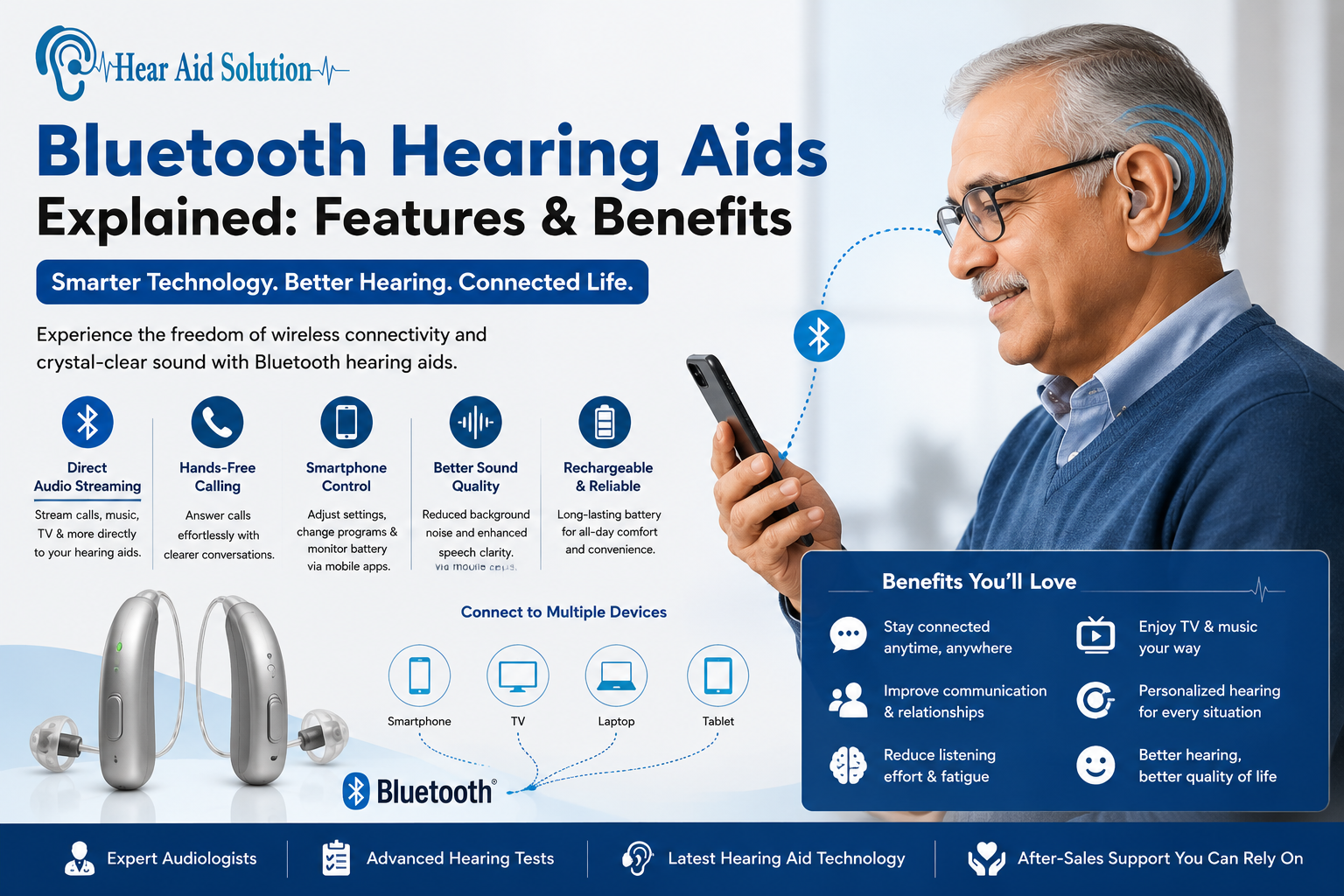
Direct Audio Streaming
One of the most popular features is direct streaming.
Users can listen to:
- Phone calls
- Music
- Podcasts
- Audiobooks
- Online meetings
- TV programs
The sound is delivered directly to the hearing aids, improving clarity and reducing interference from surrounding noise.
Hands-Free Calling
Many Bluetooth hearing aids include built-in microphones that allow users to answer and make phone calls without holding the phone to their ear.
Benefits include:
- Easier conversations
- Improved call quality
- Greater convenience while driving or multitasking
- Enhanced accessibility
This feature is especially valuable for active professionals and senior citizens.
Smartphone App Control
Most leading hearing aid manufacturers offer smartphone applications that allow users to control their devices remotely.
Common app features include:
- Volume adjustment
- Program changes
- Battery monitoring
- Sound customization
- Tinnitus management settings
- Device location tracking
Users can personalize their hearing experience with just a few taps.
Automatic Environmental Adjustments
Advanced Bluetooth hearing aids use artificial intelligence and smart sensors to adapt automatically to different listening environments.
Examples include:
- Restaurants
- Meetings
- Outdoor settings
- Quiet rooms
- Crowded gatherings
The hearing aid adjusts sound processing to optimize speech understanding and listening comfort.
TV and Media Connectivity
Watching television can be challenging for individuals with hearing loss.
Bluetooth hearing aids can connect directly to TVs and media streamers, allowing users to enjoy:
- Better dialogue clarity
- Lower TV volume requirements
- Improved entertainment experiences
- Independent listening without disturbing others
This feature is especially beneficial for families where multiple people share the same living space.
Rechargeable Technology
Many Bluetooth hearing aids now include rechargeable batteries.
Benefits include:
- No need to replace batteries frequently
- Lower long-term maintenance costs
- Environmentally friendly operation
- Convenient overnight charging
A full charge often provides all-day performance.
Benefits of Bluetooth Hearing Aids
The popularity of Bluetooth hearing aids continues to grow because they offer practical advantages in daily life.
Enhanced Speech Understanding
Direct streaming helps users hear conversations more clearly, especially during phone calls and virtual meetings.
By reducing background interference, Bluetooth hearing aids improve speech recognition and communication confidence.
Greater Convenience
Wireless connectivity eliminates many common hearing challenges.
Users can:
- Answer calls hands-free
- Stream media instantly
- Adjust settings remotely
- Switch between devices easily
This convenience simplifies everyday communication.
Improved Social Interaction
Hearing loss often affects social participation.
Bluetooth hearing aids help users:
- Engage more confidently in conversations
- Participate in group discussions
- Enjoy social gatherings
- Stay connected with friends and family
Better hearing often leads to improved emotional well-being and quality of life.
Better Workplace Performance
Modern workplaces rely heavily on digital communication.
Bluetooth hearing aids support:
- Video conferencing
- Online meetings
- Phone communication
- Presentation listening
Professionals can hear more clearly and participate more effectively.
Personalized Listening Experience
Every person's hearing needs are unique.
Bluetooth hearing aids allow users to customize settings according to:
- Environment
- Sound preferences
- Listening activities
- Comfort levels
This level of personalization improves overall hearing satisfaction.
Who Should Consider Bluetooth Hearing Aids?
Bluetooth hearing aids are suitable for a wide range of users.
They are particularly beneficial for:
Working Professionals
Professionals who frequently attend meetings and make phone calls can benefit greatly from direct audio streaming and hands-free communication.
Active Seniors
Many seniors appreciate the convenience of connecting hearing aids to phones and televisions.
Tech-Savvy Users
People who regularly use smartphones, tablets, and smart devices often enjoy the seamless integration offered by Bluetooth hearing aids.
Students
Bluetooth hearing aids can support online learning, lectures, and virtual classroom participation.
Popular Bluetooth Hearing Aid Brands
Several leading hearing aid manufacturers offer Bluetooth-enabled models.
Popular options include:
Signia
Known for advanced connectivity, AI-powered sound processing, and rechargeable technology.
Phonak
Offers universal Bluetooth connectivity compatible with many devices.
Starkey
Provides innovative Bluetooth solutions and health-tracking features.
Widex
Recognized for natural sound quality and smartphone integration.
Oticon
Offers excellent speech enhancement and wireless connectivity.
ReSound
Known for strong Bluetooth streaming capabilities and user-friendly mobile apps.
Are Bluetooth Hearing Aids Safe?
Yes. Bluetooth hearing aids use low-energy wireless technology specifically designed for medical and consumer electronics.
They undergo rigorous testing to ensure:
- Reliable performance
- User safety
- Secure device connections
- Minimal power consumption
Millions of hearing aid users worldwide safely use Bluetooth-enabled devices every day.
Things to Consider Before Buying Bluetooth Hearing Aids
Before purchasing, consider the following factors:
Compatibility
Ensure your smartphone and other devices support the hearing aid's Bluetooth system.
Lifestyle Needs
Choose features that match your daily activities and communication requirements.
Battery Preferences
Decide whether rechargeable or disposable battery models are more suitable.
Budget
Bluetooth hearing aids are available at various price points depending on technology levels and features.
Professional Fitting
Proper fitting and programming by a qualified audiologist are essential for achieving optimal performance.
Future of Bluetooth Hearing Aid Technology
Hearing aid technology continues to evolve rapidly.
Future innovations may include:
- Enhanced artificial intelligence
- Improved voice recognition
- Health monitoring capabilities
- Real-time language translation
- Smarter environmental adaptation
- Integration with smart home systems
These advancements will further improve hearing experiences and user convenience.
Conclusion
Bluetooth hearing aids represent a major advancement in modern hearing care. By combining advanced sound processing with wireless connectivity, these devices offer users a more convenient, comfortable, and personalized hearing experience.
From hands-free phone calls and direct media streaming to smartphone control and automatic sound adjustments, Bluetooth hearing aids help individuals stay connected to both the people and technology around them.
If you're considering upgrading your hearing solution, consulting a qualified audiologist can help determine whether Bluetooth hearing aids are the right choice for your hearing needs, lifestyle, and budget.
FAQs
What are Bluetooth hearing aids?
Bluetooth hearing aids are wireless hearing devices that connect directly to smartphones, TVs, tablets, and other compatible devices for improved audio streaming and communication.
Can Bluetooth hearing aids connect to smartphones?
Yes. Most modern Bluetooth hearing aids can connect to Android and iPhone devices for calls, music streaming, and remote control through dedicated apps.
Are Bluetooth hearing aids worth it?
For many users, Bluetooth hearing aids provide significant benefits including better communication, improved convenience, and enhanced listening experiences.
Do Bluetooth hearing aids use more battery?
Bluetooth streaming may consume additional power, but many modern devices use energy-efficient technology and rechargeable batteries to provide all-day performance.
Which hearing aid brands offer Bluetooth connectivity?
Leading brands such as Signia, Phonak, Starkey, Widex, Oticon, and ReSound offer Bluetooth-enabled hearing aids with advanced connectivity features.