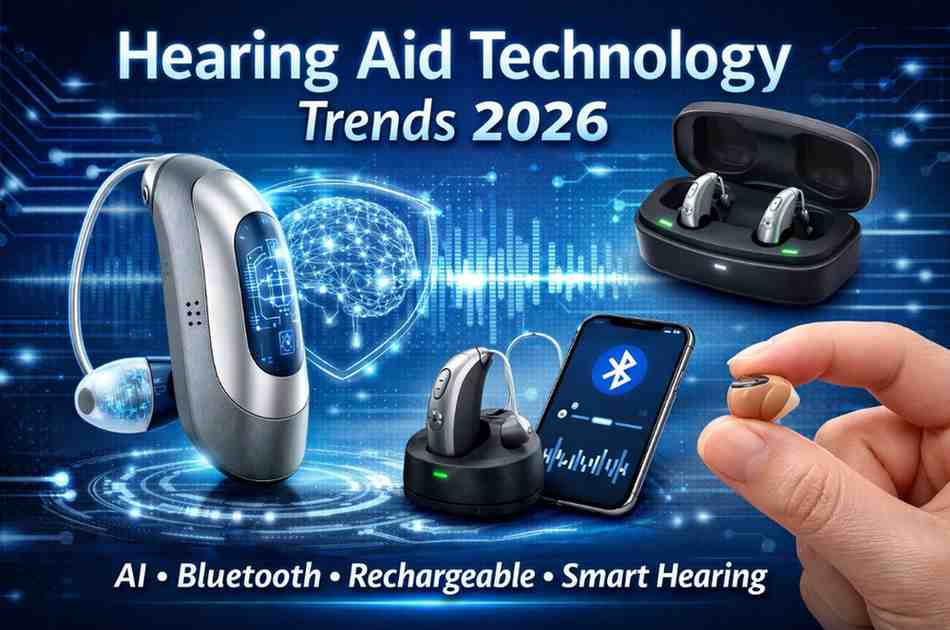
Hearing aid technology has advanced rapidly in recent years, and 2026 is bringing some of the most exciting innovations yet. Modern hearing aids are no longer simple sound amplifiers—they are smart, AI-powered devices designed to improve hearing, communication, and overall quality of life.
With millions of people experiencing hearing loss
worldwide, manufacturers are focusing on developing smaller, smarter, and
more powerful hearing devices. From artificial intelligence to Bluetooth
connectivity, hearing aids are becoming more advanced than ever before.
In this article, we will explore the top hearing aid
technology trends in 2026 and how they are transforming the hearing care
industry.
1. Artificial Intelligence (AI) Powered Hearing Aids
One of the biggest innovations in hearing aid technology
is Artificial Intelligence (AI). AI-powered hearing aids are capable of
learning from a user’s listening habits and automatically adjusting sound
settings based on the environment.
For example, if you move from a quiet room to a noisy
restaurant, AI technology can automatically adjust volume levels and reduce
background noise. This helps users hear conversations more clearly without
manually changing settings.
Key benefits of AI hearing aids include:
- Automatic
sound adjustment
- Improved
speech clarity
- Better
noise reduction
- Personalized
listening experience
AI technology allows hearing aids to become smarter over
time, making them more comfortable and effective for everyday use.
2. Bluetooth Connectivity and Smartphone Integration
Another major trend in 2026 is Bluetooth-enabledhearing aids. These devices allow users to connect their hearing aids
directly to smartphones, tablets, televisions, and other digital devices.
With Bluetooth technology, users can:
- Stream
phone calls directly to their hearing aids
- Listen
to music or podcasts with better clarity
- Control
hearing aid settings through mobile apps
- Adjust
volume and sound profiles easily
Smartphone apps also allow hearing aid users to customize
their listening experience. Many apps now include remote adjustments by
audiologists, making hearing care more convenient than ever.
3. Rechargeable Hearing Aids
Rechargeable hearing aids are becoming increasingly
popular as people move away from traditional disposable batteries. In 2026,
most modern hearing aids come with long-lasting rechargeable lithium-ion
batteries.
These batteries can typically last an entire day on a
single charge, eliminating the need to replace small batteries frequently.
Advantages of rechargeable hearing aids include:
- Easy
overnight charging
- Environmentally
friendly design
- Reduced
maintenance
- Cost
savings on batteries
Many models now come with portable charging cases,
allowing users to recharge their hearing aids while traveling.
4. Invisible and Miniature Hearing Aids
Design improvements are another major trend in hearing
aid technology. In 2026, hearing aids are becoming smaller, lighter, and
almost invisible when worn.
Popular discreet hearing aid styles include:
- Invisible-in-Canal
(IIC) hearing aids
- Completely-in-Canal
(CIC) hearing aids
- Receiver-in-Canal
(RIC) hearing aids
These tiny devices fit comfortably inside the ear canal,
making them difficult for others to notice. Despite their small size, modern
invisible hearing aids still offer advanced features such as noise reduction
and Bluetooth connectivity.
For many users, especially younger adults, discreet designs make hearing aids more appealing and comfortable to wear.
Modern hearing technology is also improving solutions for kids. Explore our complete guide on hearing aids for children to learn more.
5. Advanced Noise Reduction Technology
Background noise has always been one of the biggest
challenges for people with hearing loss. Fortunately, modern hearing aids in
2026 use advanced noise reduction technology to improve speech clarity.
These devices can detect different sound environments and
automatically filter unwanted noise. For example, they can reduce sounds like:
- Traffic
noise
- Wind
noise
- Crowded
environments
- Background
chatter
By focusing on speech and reducing distractions, hearing
aids help users understand conversations more easily in noisy environments.
6. Health Monitoring Features
Another exciting trend in hearing aid technology is health
tracking features. Some of the latest hearing aids now include sensors that
monitor physical activity and overall health.
These devices can track:
- Daily
step count
- Physical
movement
- Heart
rate (in some models)
- Fall
detection alerts
This technology is especially beneficial for senior citizens, as it allows caregivers or family members to monitor health and safety. If you are looking for the best solutions for older adults, explore our guide on hearing aids for senior citizens.
Hearing aids are gradually becoming multi-functional
wearable health devices, similar to smartwatches.
7. Remote Hearing Care and Tele-Audiology
The rise of telehealth has also impacted the hearing care
industry. In 2026, many hearing aid providers offer remote hearing care
services, also known as tele-audiology.
With this technology, users can connect with their
hearing specialist through a smartphone app or online platform. Audiologists
can remotely adjust hearing aid settings, diagnose problems, and provide
guidance without requiring an in-person clinic visit.
Benefits of remote hearing care include:
- Convenient
adjustments from home
- Faster
problem resolution
- Reduced
travel for elderly patients
- Better
ongoing support
This trend is making hearing care more accessible for
people living in remote areas.
8. Directional Microphones for Better Speech Understanding
Directional microphone technology is another important
advancement in hearing aids. These microphones focus on sounds coming from a
specific direction, usually the person speaking in front of the user.
This feature helps reduce surrounding noise and makes
conversations clearer, especially in crowded places such as restaurants, meetings,
or social gatherings.
New hearing aids in 2026 use adaptive directional
microphones that automatically adjust depending on the environment,
providing a more natural listening experience.
9. Improved Tinnitus Relief Technology
Many people with hearing loss also experience tinnitus,
a condition that causes ringing or buzzing in the ears. Modern hearing aids now
include built-in tinnitus management features.
These devices produce gentle sound therapy that helps
mask tinnitus sounds and reduce discomfort. Some hearing aids also allow users
to customize tinnitus relief settings through smartphone apps.
This technology provides significant relief for
individuals struggling with chronic tinnitus.
Conclusion
Hearing aid technology in 2026 is smarter, smaller,
and more powerful than ever before. Innovations such as artificial
intelligence, Bluetooth connectivity, rechargeable batteries, and health
monitoring features are transforming how people experience hearing care.